Dealing with Loneliness in the Age of AI
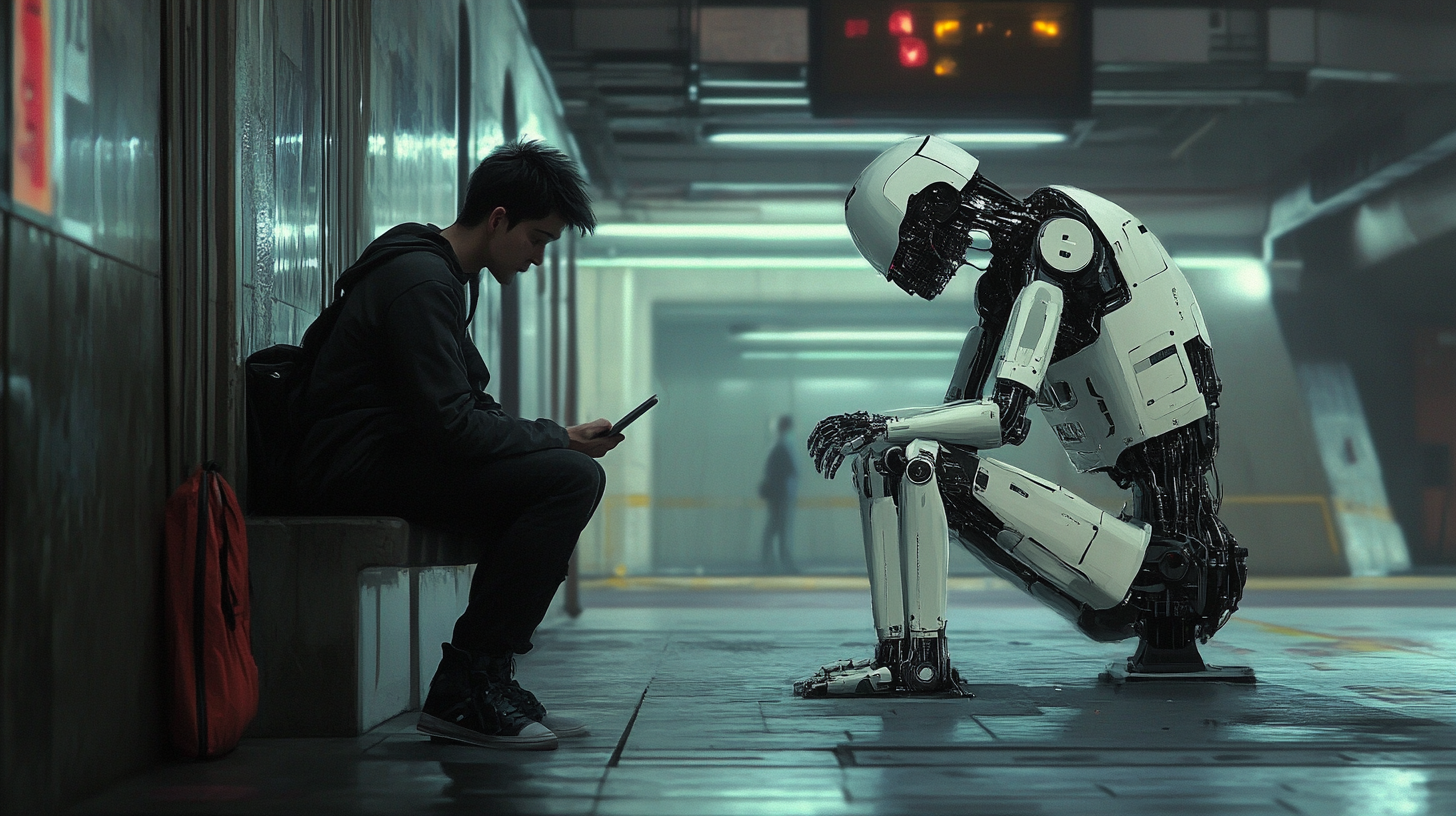
In today’s world, where everyone is almost always on the screens of their gadgets, it’s ironic that the technology that’s supposed to bring us together as people is actually causing us to spend less and less time in person.

In today’s world, where everyone is almost always glued to their screens, it’s ironic that the technology meant to connect us is actually making us spend less time with each other in person. In the UK, over 7% of the population, or nearly four million people, experience chronic loneliness, meaning they often feel lonely or isolated.
People who are more connected to the internet often report feeling disconnected from the real world, leading to a pervasive sense of loneliness. While it might seem straightforward to suggest that the solution is to put down our gadgets and spend more time with family and friends, this is not always easy for everyone. Many individuals struggle with socializing and find human interaction daunting.
Fortunately, the rise of artificial intelligence (AI) offers a new way to combat loneliness through AI boyfriends and AI girlfriends. These virtual companions are designed to be compassionate and kind, allowing users to interact with them as if they were real people.
One of the most popular platforms that lets you create your AI girlfriend and AI boyfriend is Nectar AI.
What is Nectar AI?
Nectar AI is a generative AI platform that enables users to create their own AI girlfriend or boyfriend from scratch using simple text descriptions. The underlying image model is incredibly powerful, capable of generating hyper-realistic images in mere seconds. Try creating your AI companion.
Users can customize their AI companions with hundreds of editing controls, allowing them to adjust even the tiniest details to achieve the perfect look.

Image & Video Creation
The language model of Nectar AI is equally impressive, facilitating natural conversations with your AI partner. It remembers past interactions, helping to foster a genuine connection. Additionally, Nectar AI supports NSFW content generation for both images and conversations, meaning users can create nude photos of their AI companions and engage in steamy discussions. Try creating your AI companion.
Could AI Cure Human Loneliness?
In an age where many describe their lives as lonely, the potential for AI companionship to provide stimulating and personalized social interaction is becoming increasingly relevant. AI could serve as a valuable tool for individuals on the brink of social isolation, allowing them to practice their social skills through conversation and interaction. This practice could help build self-confidence, reducing the risk of complete withdrawal from society.
However, research suggests that while AI can help alleviate feelings of loneliness, having close human friends remains the best solution. Until society prioritizes social connectedness, AI companions can serve as a temporary solution for the millions of people who lack meaningful relationships.
Create Now!
The Science Behind AI Companionship
Recent studies have shown that AI companions can effectively reduce feelings of loneliness. For instance, research from Harvard Business School found that interactions with AI companions can alleviate loneliness on par with human interactions, and even more so than passive activities like watching videos.
Users often underestimate the degree to which these AI companions can improve their loneliness, highlighting their potential as a valuable resource.AI companions offer a unique form of interaction that can help users feel heard and understood. This aspect is particularly appealing in a world where many face rejection, judgment, and isolation. For many, AI companions provide a safe space to express themselves freely, fulfilling a deep-seated need for connection.
The Risks and Ethical Considerations
While AI companions can offer temporary relief from loneliness, there are ethical concerns to consider. Some experts warn that forming relationships with machines could lead to fewer fulfilling human connections. Sherry Turkle, a professor at MIT, has expressed concerns that reliance on AI for companionship may detract from the quality of human relationships.
Moreover, there are significant privacy issues surrounding the use of AI companions. Many applications, like Replika, have faced scrutiny for their data privacy practices. Users often share personal information with these platforms, raising questions about how that data is used and protected. Ethical AI development must prioritize user privacy and ensure that these technologies do not exploit the vulnerabilities of lonely individuals for profit.
The Future of AI Companionship
As AI technology continues to evolve, the potential for AI companions to play a significant role in addressing loneliness will likely grow. With increasingly sophisticated chatbots and virtual companions, researchers are exploring how these technologies can be designed to support healthy and positive interactions.
However, the future of AI companionship is not without challenges. The commercialization of loneliness poses a risk, as companies may prioritize profit over the well-being of their users. As AI companions become more prevalent, it is crucial to ensure that they are developed ethically, with a focus on enhancing human connections rather than replacing them.
Conclusion
While these virtual companions can provide comfort and alleviate feelings of loneliness, they are not a substitute for genuine human relationships. The challenge lies in finding a balance between leveraging AI technology to combat loneliness and ensuring that we do not lose sight of the importance of real human connections.